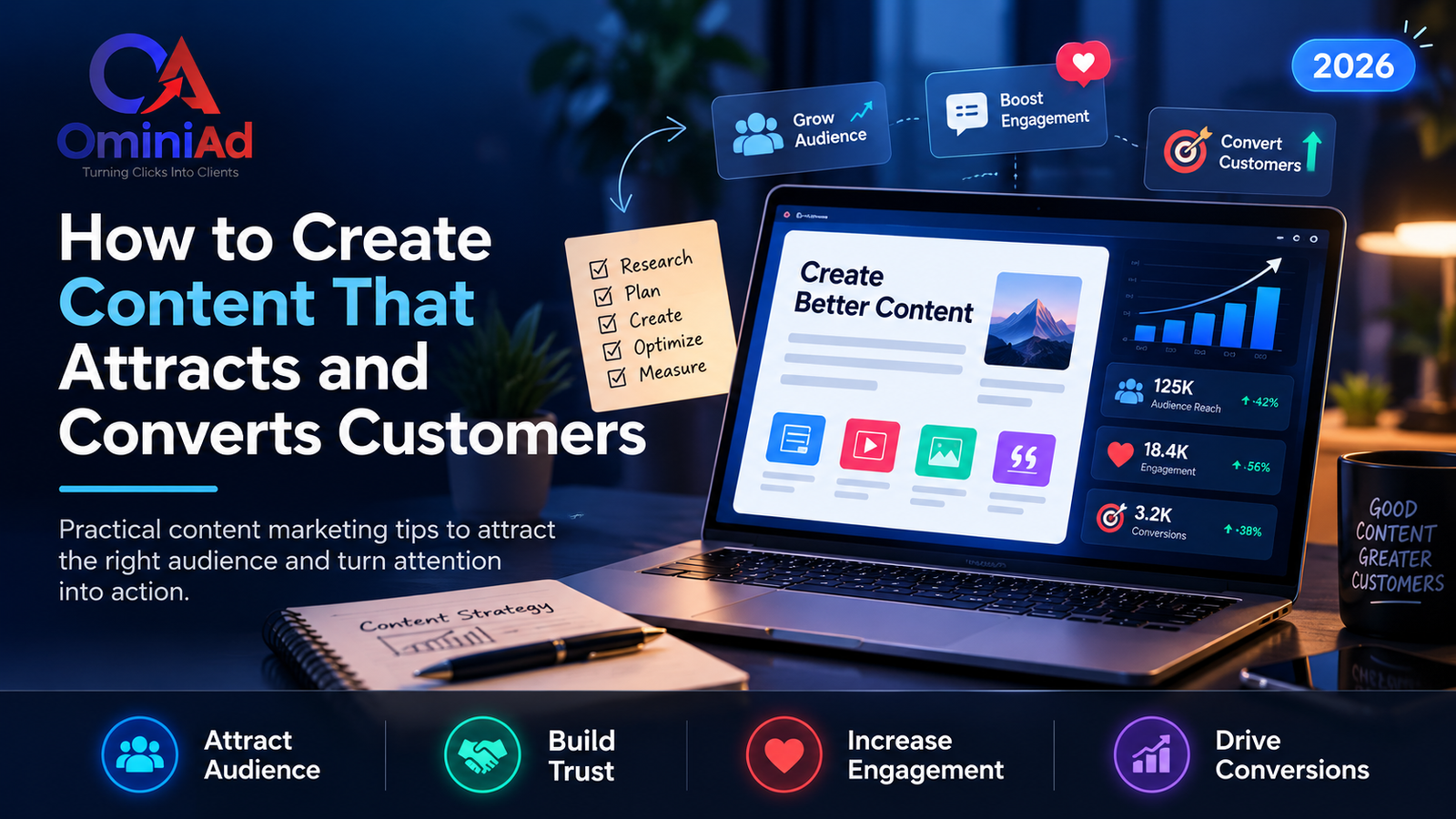
Content that converts helps businesses attract the right audience, build trust and encourage potential customers to take action. Useful content can answer customer questions, build trust and help people understand why a product or service may be right for them.
The key is to create content with a clear purpose instead of posting randomly. In this guide, we’ll look at practical ways businesses can create content that attracts the right audience, keeps them engaged and supports conversions.
How to Create Content That Attracts and Converts Customers
- Understand What Your Audience Is Looking For
- Create Content Around Real Customer Problems
- Use Clear and Relevant Headlines
- Make Your Content Easy to Read
- Add Strong Calls to Action
- Use Different Content Formats
- Track Performance and Improve Your Content
1. Understand What Your Audience Is Looking For
Effective content starts with understanding what the audience actually wants to know. Businesses should identify the questions, problems and topics that matter most to their potential customers. This makes it easier to create content that feels relevant instead of generic.
Search queries , customer conversations, social media comments and frequently asked questions can all provide useful content ideas. When content is based on real audience needs, it has a better chance of attracting attention and encouraging people to take the next step.
2. Create Content Around Real Customer Problems
Content becomes more useful when it focuses on real problems customers are trying to solve. Instead of only promoting products or services, businesses should create content that explains solutions, answers concerns and helps people make better decisions.
For example, guides, comparison posts, how-to articles and problem-solving videos can address common customer challenges in a practical way. When content provides genuine value, it can build trust and make potential customers more likely to engage with the business.
3. Use Clear and Relevant Headlines
A strong headline helps people quickly understand what the content is about and why it may be useful to them. Clear headlines can improve attention, readability and the chances of users continuing to read or click through.
Headlines should be specific, relevant to the topic and aligned with what the audience is searching for. Avoid vague or overly promotional wording. A simple, benefit-focused headline can often perform better because it gives readers a clear reason to engage with the content.
4. Make Your Content Easy to Read
Even useful information can lose attention if it is difficult to read. Businesses should keep paragraphs short, use simple language and organize content with clear headings, bullet points and enough spacing.
Content should also work well on mobile devices because many users read blogs, social posts and guides on their phones. A clean structure makes information easier to understand and helps readers stay engaged for longer.
5. Add Strong Calls to Action
A clear call to action helps readers understand what they should do after consuming the content. Depending on the goal, this could be contacting the business, exploring a service, downloading a resource, subscribing to updates or making a purchase.
Calls to action should feel natural and relevant to the content instead of being overly promotional. Placing them at suitable points within the content can guide readers toward the next step and improve the chances of conversion.
6. Use Different Content Formats
Different people prefer to consume content in different ways. Some users may prefer detailed blog posts, while others respond better to short videos, infographics, carousels, case studies or email content. Using a mix of formats can help businesses reach a wider audience.
Businesses can also repurpose one useful topic into multiple formats. For example, a blog post can be turned into a social media carousel, short video or email update. This helps get more value from the same idea while keeping content consistent across different channels.
7. Track Performance and Improve Your Content
Creating content is only one part of content marketing. Businesses should also review how their content performs to understand which topics, formats and channels are generating the most engagement, traffic or enquiries.
Metrics such as page views, time on page, clicks, shares, conversions and search performance can provide useful insights. Regularly reviewing these results can help businesses improve future content and focus more on the topics that deliver meaningful value.
Conclusion
Content that attracts and converts customers should be useful, relevant and easy to understand. Businesses need to focus on real audience needs, create clear messaging and guide readers toward the next step with suitable calls to action.
The best results usually come from testing different topics and formats, tracking performance and improving content over time. With a consistent Content Strategy, businesses can build trust, improve visibility and create more opportunities to turn readers into customers.