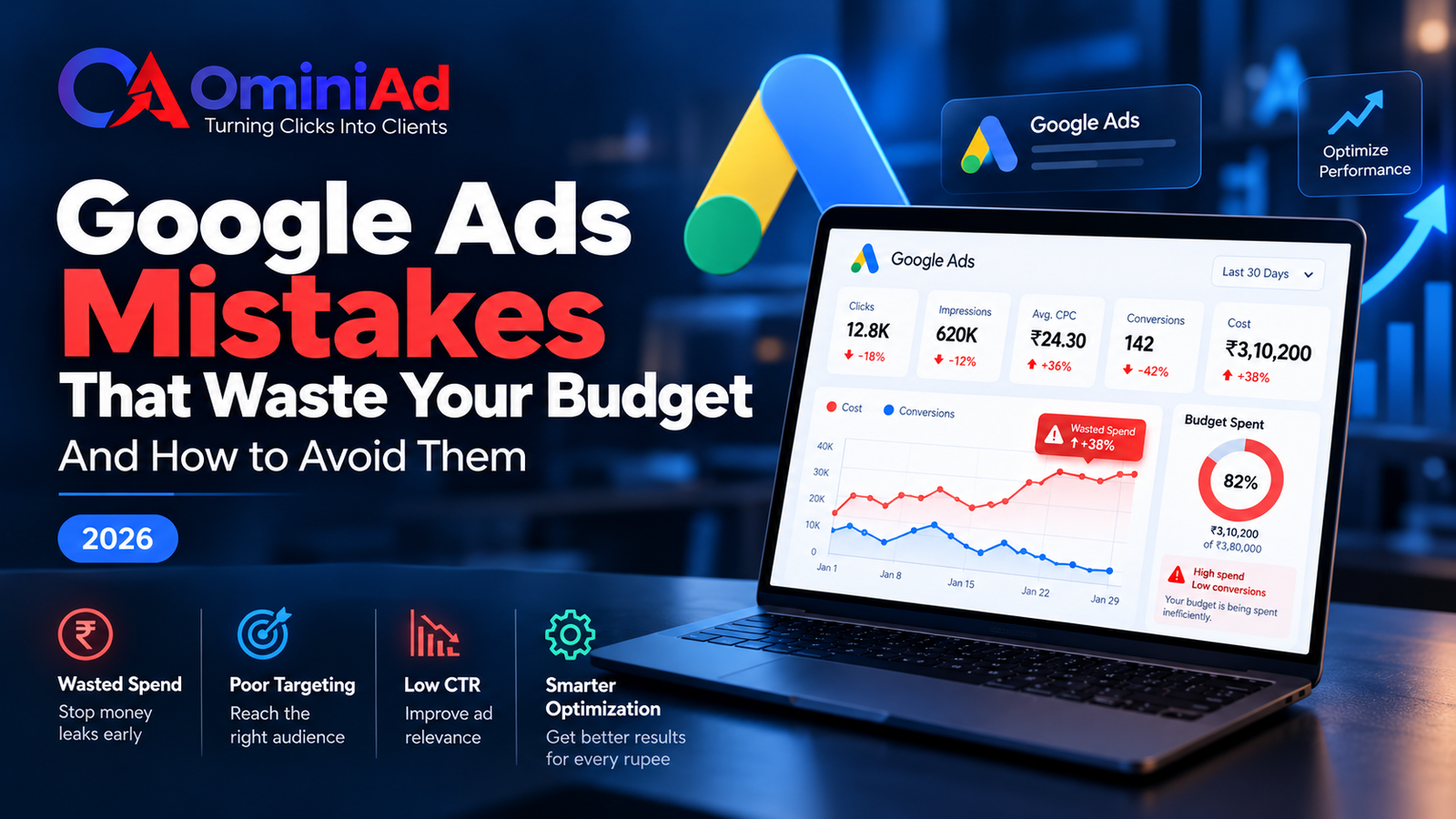
Google Ads mistakes can waste your advertising budget when campaigns are not managed carefully. Google Ads can help businesses reach potential customers quickly, but poorly managed campaigns can also waste a significant part of the advertising budget. From targeting the wrong audience to using broad keywords and ignoring conversion tracking, small mistakes can quickly increase costs without generating meaningful results.
The good news is that many of these problems can be avoided with better campaign structure, regular monitoring and data-based optimization. In this guide, we’ll look at common Google Ads mistakes that waste budget and explain how businesses can avoid them.
Common Google Ads Mistakes That Waste Your Budget
- Using Broad Keywords Without Control
- Targeting the Wrong Audience or Location
- Ignoring Negative Keywords
- Sending Traffic to Weak Landing Pages
- Not Tracking Conversions Properly
- Setting the Budget Without Regular Optimization
- Ignoring Campaign Performance Data
1. Using Broad Keywords Without Control
Broad keywords can bring a large amount of traffic, but not all of that traffic will be relevant. If keyword targeting is too wide, ads may appear for searches that do not match the business offer or customer intent. This can increase clicks and spending without improving conversions.
Businesses should use more specific keywords, review search terms regularly and choose appropriate match types based on campaign goals. A more controlled keyword strategy can help reduce irrelevant clicks and make the advertising budget more efficient.
2. Targeting the Wrong Audience or Location
Even a well-written ad can perform poorly if it is shown to the wrong audience or in the wrong location. Businesses may end up paying for clicks from users who are outside their service area or are unlikely to become customers.
Location targeting, audience settings, age groups and other campaign filters should be reviewed carefully before launching ads. For local businesses, focusing on the areas they actually serve can help improve lead quality and reduce unnecessary ad spend.
3. Ignoring Negative Keywords
Negative keywords help prevent ads from appearing for irrelevant searches. If they are ignored, businesses may continue paying for clicks from users who are looking for something completely different from the product or service being advertised.
Regularly reviewing the Search Terms report can help identify irrelevant queries that should be added as negative keywords. This simple step can improve traffic quality, reduce wasted spend and make campaigns more focused.
4. Sending Traffic to Weak Landing Pages
A Google Ads campaign may generate clicks, but those clicks will not help much if the landing page is slow, confusing or unrelated to the ad. Visitors should immediately understand what the business offers and what action they should take next.
A strong landing page should have a clear headline, relevant information, fast loading speed, mobile-friendly design and a visible call to action. Keeping the ad message and landing page content closely aligned can improve user experience and increase the chances of conversion.
5. Not Tracking Conversions Properly
Without proper conversion tracking, it becomes difficult to understand which ads, keywords or campaigns are actually generating valuable actions. Businesses may continue spending on campaigns that receive clicks but do not produce leads, calls or sales.
Conversion tracking should be set up for important actions such as form submissions, phone calls, purchases or appointment bookings. Accurate tracking helps businesses measure real campaign performance and make better decisions about budgets and optimization.
6. Setting the Budget Without Regular Optimization
Setting a daily or monthly budget is only the beginning. If campaigns are left running without regular review, money can continue flowing toward keywords, audiences or ads that are not producing meaningful results.
Businesses should monitor cost per click, conversions, search terms and overall campaign performance on a regular basis. Moving budget toward better-performing campaigns and reducing spend on weak areas can help improve efficiency and return on ad spend over time.
7. Ignoring Campaign Performance Data
Google Ads provides useful data about clicks, impressions, conversions, costs and user behaviour. Ignoring this information can lead to repeated mistakes and unnecessary spending because businesses may not know which parts of the campaign are working well.
Regularly reviewing campaign reports can help identify high-performing keywords, weak ads, costly search terms and conversion trends. Using this data to make informed adjustments can improve campaign efficiency and help businesses get better results from their advertising budget.
Conclusion
Google Ads can be a powerful way to generate traffic and leads, but small campaign mistakes can quickly increase costs and reduce overall performance. Issues such as broad keyword targeting, poor audience selection, weak landing pages and missing conversion tracking can all lead to wasted budget.
The best approach is to monitor campaigns regularly, use performance data to guide decisions and continuously improve targeting, keywords, ads and landing pages. With consistent optimization, businesses can reduce unnecessary spending and get more value from their Google Ads campaigns.
Businesses can also strengthen their overall strategy by combining paid advertising with other Digital Marketing Channels.